Copper Ore vs. Copper Concentrates: Understanding the Industrial Value Chain
By ZTRONE RESOURCES
· 03/27/2026
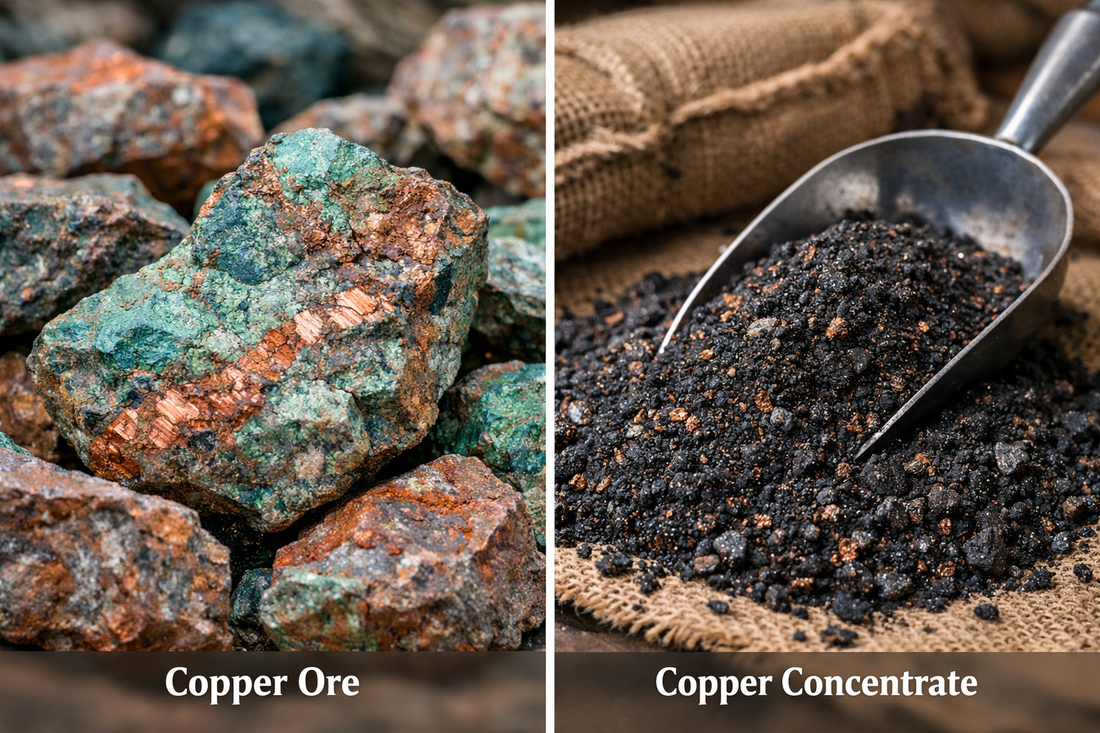
Copper Ore vs. Copper Concentrates: Understanding the Industrial Value Chain Introduction In global commodity markets, terms like copper ore and copper concentrates are often used interchangeably by non-specialists. However, for industrial users, traders, and procurement professionals, the distinction is critical. Understanding the difference between these two materials is essential for evaluating supply chains, pricing structures, logistics, and processing requirements. This article provides a structured explanation of copper ore vs. copper concentrates, highlighting their characteristics, industrial roles, and commercial implications. What is Copper Ore? Copper ore is the natural, unprocessed rock extracted directly from the earth through mining operations. It contains copper in combination with other minerals such as: Sulfides (e.g., chalcopyrite, bornite) Oxides (e.g., malachite, cuprite) Gangue materials (waste rock like silica, iron, and clay) Key Characteristics of Copper Ore: Low copper content: Typically ranges between 0.5% – 2% Cu High impurity levels: Significant presence of non-valuable materials Bulk and heavy: Requires large-scale transport for relatively low metal yield Requires processing: Cannot be used directly in industrial manufacturing Industrial Reality: Copper ore is not a finished or tradable industrial input in most global markets. It must undergo beneficiation before it becomes commercially viable. What are Copper Concentrates? Copper concentrates are the processed output of copper ore, produced through crushing, grinding, and flotation processes that separate valuable copper minerals from waste rock. Key Characteristics of Copper Concentrates: High copper content: Typically 20% – 30% Cu Reduced impurities: Waste materials significantly removed Powder or granular form: Easier to handle and transport Ready for smelting: Direct feedstock for copper smelters Industrial Role: Copper concentrates are the primary raw material used by smelters to produce refined copper (cathodes). The Processing Journey: From Ore to Concentrate The transformation from ore to concentrate involves several stages: Mining: Extraction of raw copper ore Crushing & Grinding: Reducing rock size Flotation: Separating copper minerals using chemical reagents Concentration: Producing high-grade copper concentrate This process significantly increases the economic value per ton. Key Differences: Copper Ore vs. Copper ConcentratesFeatureCopper OreCopper ConcentratesCopper Content0.5% – 2%20% – 30%Processing LevelRawBeneficiatedIndustrial UseNot directly usableSmelting feedstockTransport EfficiencyLowHighMarket DemandLimitedGlobal, high demandPricing BasisNegotiated, less standardizedLME-linked (via TC/RC)Commercial and Trading Implications1. Market Preference Global buyers—especially in China, Europe, and Asia—primarily demand copper concentrates, not raw ore. This is because: Smelters require consistent feedstock Concentrates reduce logistics cost per unit of copper Quality can be standardized and tested (assay reports) 2. Pricing Mechanism Copper Ore: Priced based on estimated recoverable copper, often less transparent Copper Concentrates: Priced using: LME copper price Treatment Charges (TC) Refining Charges (RC) 3. Logistics & Risk Ore transport = higher cost, higher waste, lower value density Concentrates = optimized shipping, lower risk, better margins 4. Buyer Type Ore Buyers: Small processors, regional plants Concentrate Buyers: Large smelters, industrial giants Why This Distinction Matters in Trade For intermediaries, procurement firms, and buyers: Offering copper ore without processing capacity is a weak position Offering copper concentrates with verified assay + supply capacity is commercially viable Strategic Insight for Buyers and Facilitators Always request assay reports (SGS, Intertek, etc.) Verify monthly supply capacity Understand penalties for impurities (arsenic, sulfur, etc.) Structure deals around LME-based pricing models Conclusion Copper ore and copper concentrates represent two distinct stages of the copper value chain. While ore is the raw starting point, concentrates are the true tradable industrial commodity that drives global copper production. For any serious participant in the copper market—whether buyer, investor, or facilitator—understanding this distinction is not optional; it is foundational to making informed, profitable, and credible transactions. By ZTRone Resources Team.
About This Author

ZTRONE RESOURCES
Queens Road, Hong Kong
ZTRone Resources is a international supply and procurement company with geographical offices that make coordinated decisions. With a growing network of foreign offices to support global operations, we specialize in the supply of Oil & Gas, Copper Cathodes, Copper concentrates, Gold dore and essentia…
More Articles From This Author
Record-Breaking Naphtha Imports Fuel China's Boom.

2026-03-27Demand Growth Outlook• China’s light naphtha demand is set to expand significantly in 2025–2026, driven primarily by its huge petrochemical sector, especially steam crackers that use naphtha as a core feedstock. According to industry and ag… Read More »
 Australia
 Canada
 Cayman Islands
 Dominican Republic
 India
India
 Indonesia
 Ireland
 Jamaica
 New Zealand
 Singapore
 Thailand
 United Kingdom
 United States
 Vietnam

 Hong Kong Business Directory